Project Autobeton — Automated Material Sample Testing
Lab: Civil Engineering Research Lab, Oregon State University
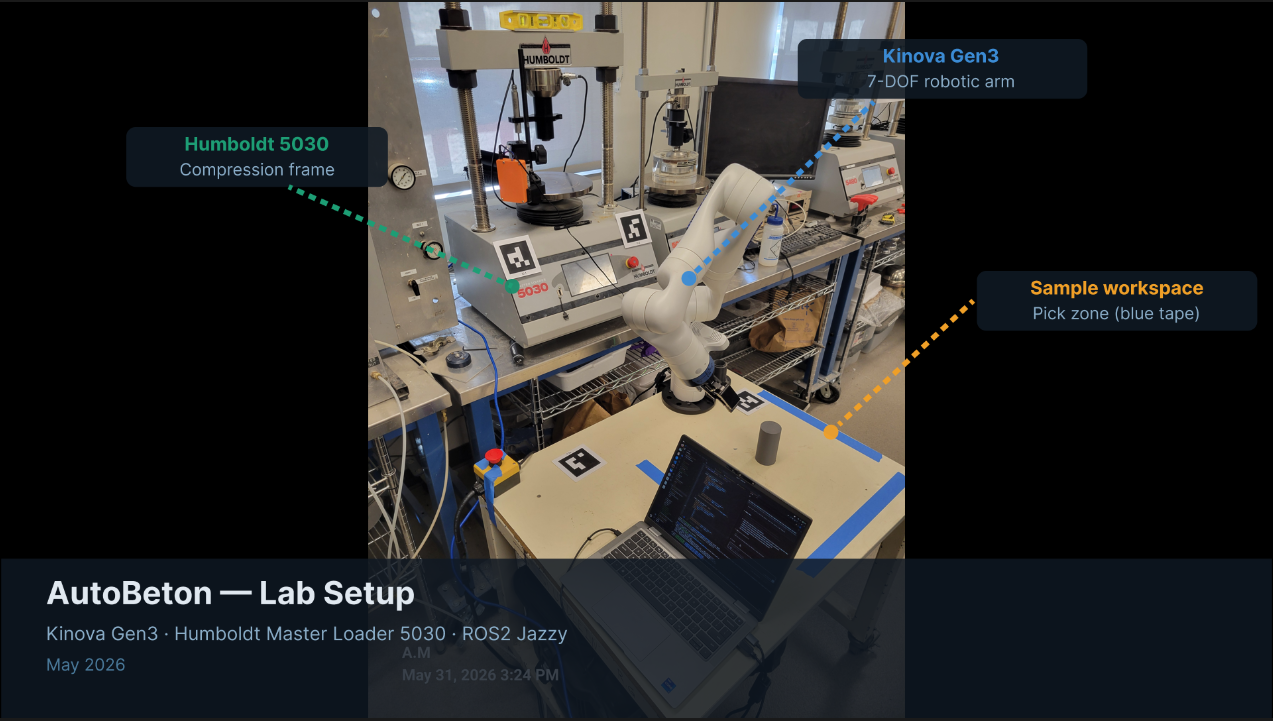
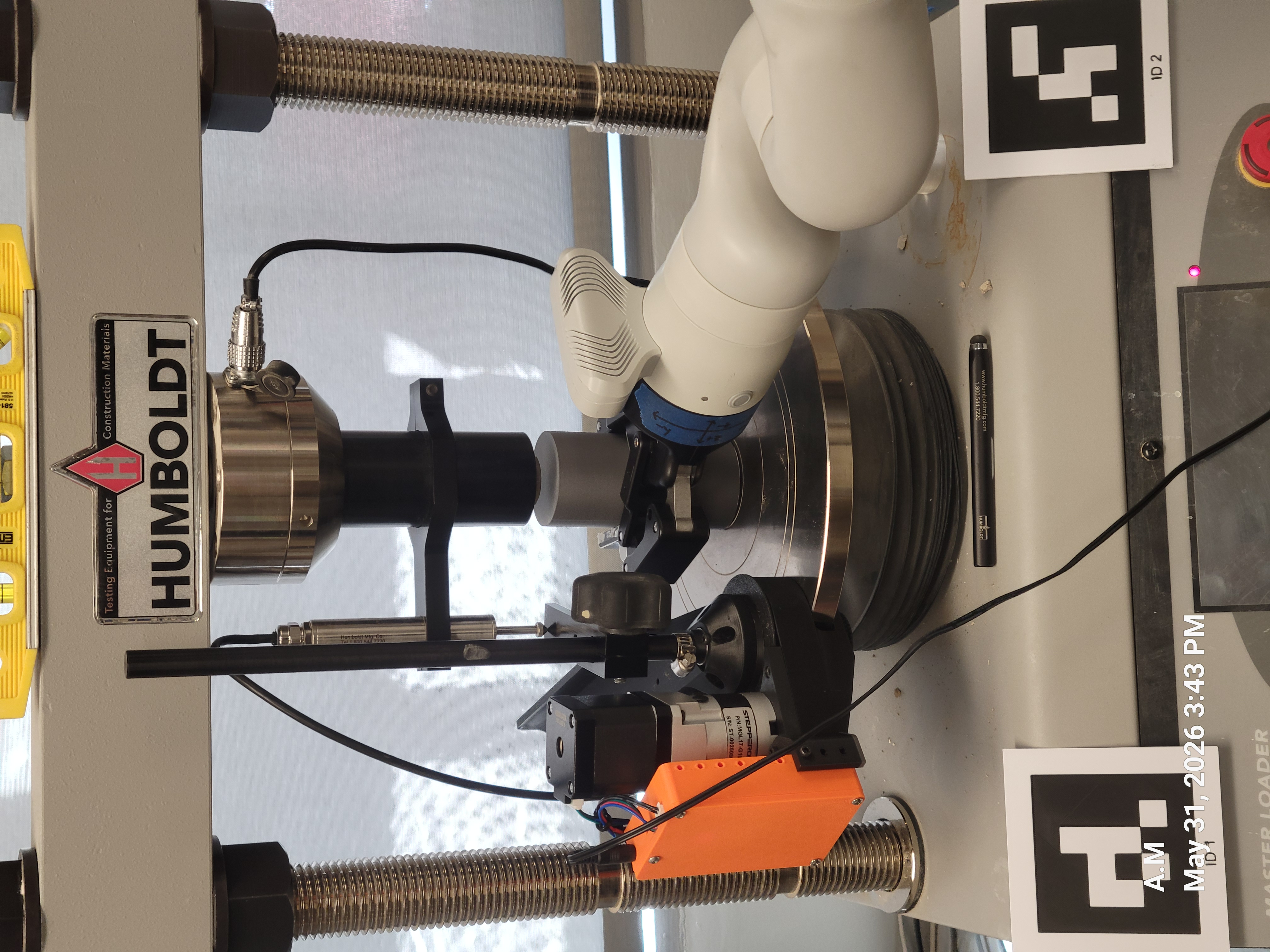
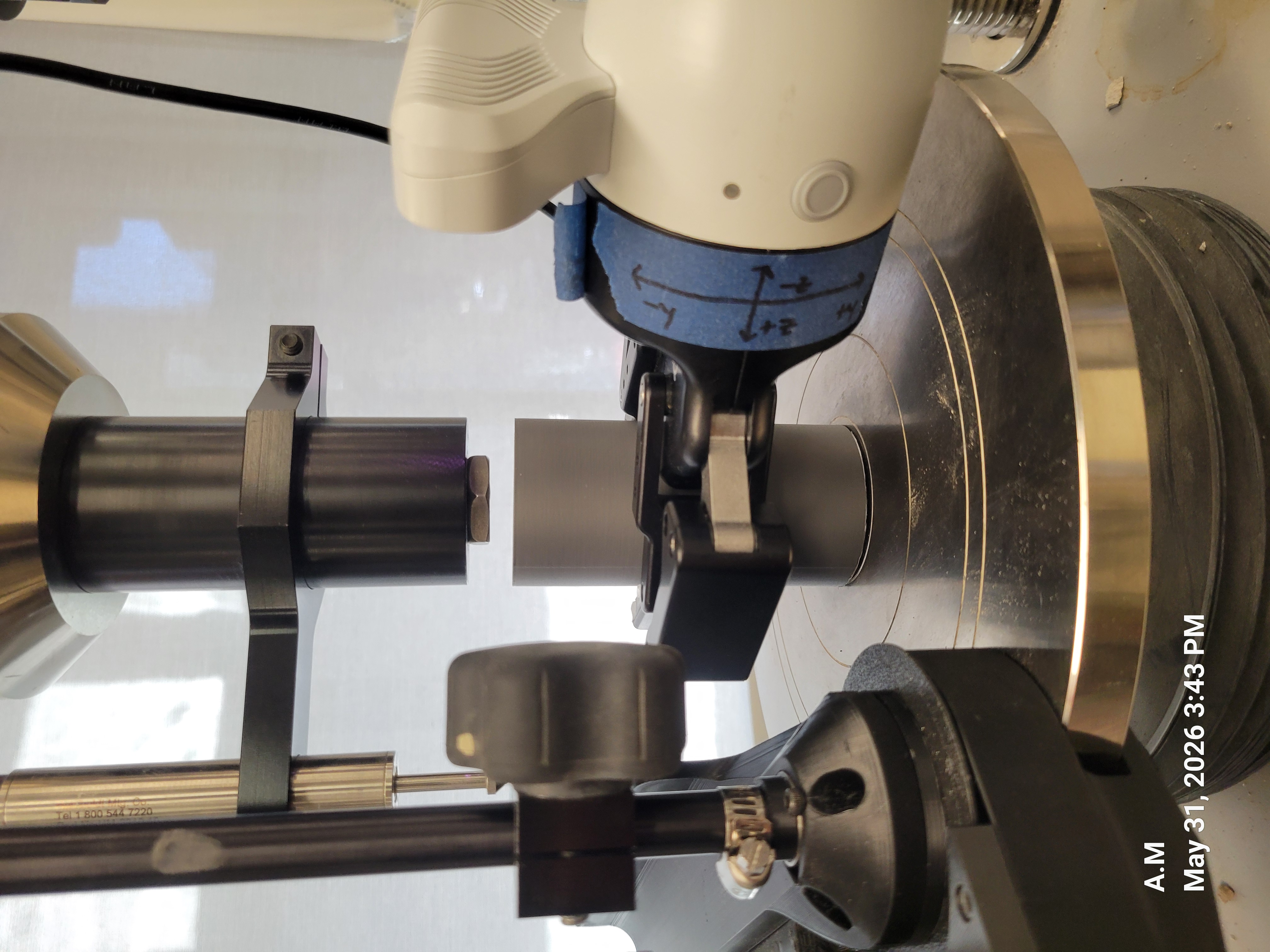
Robot: Kinova Gen3 6-DOF arm with Robotiq 2F-85 gripper
The Problem
Civil Engineering labs run hundreds of repetitive compression tests on soil and concrete samples — each one requires a technician to manually load the sample, run the machine, and log the result. Project Autobeton uses a robotic arm to handle the physical work, so researchers can focus on the science instead of the repetition.
Key Decisions
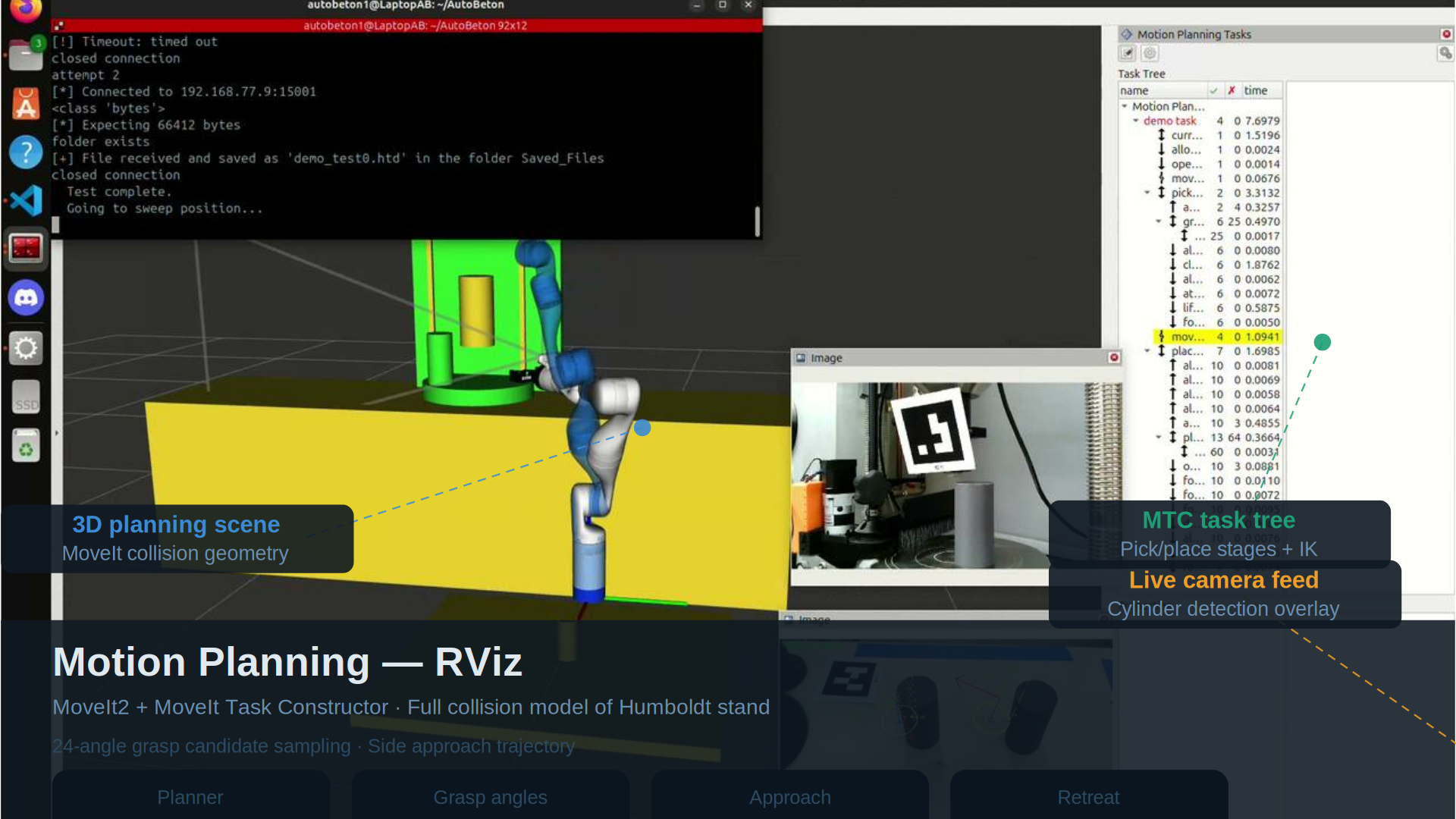
Build and test in simulation before touching the real robot
Before running any motion on the real arm, I built the full workflow in simulation — modelling the lab workspace, machine positions, and the arm’s reach limits in software. This caught collision and planning issues early without risking hardware, and gave me a fast iteration loop.
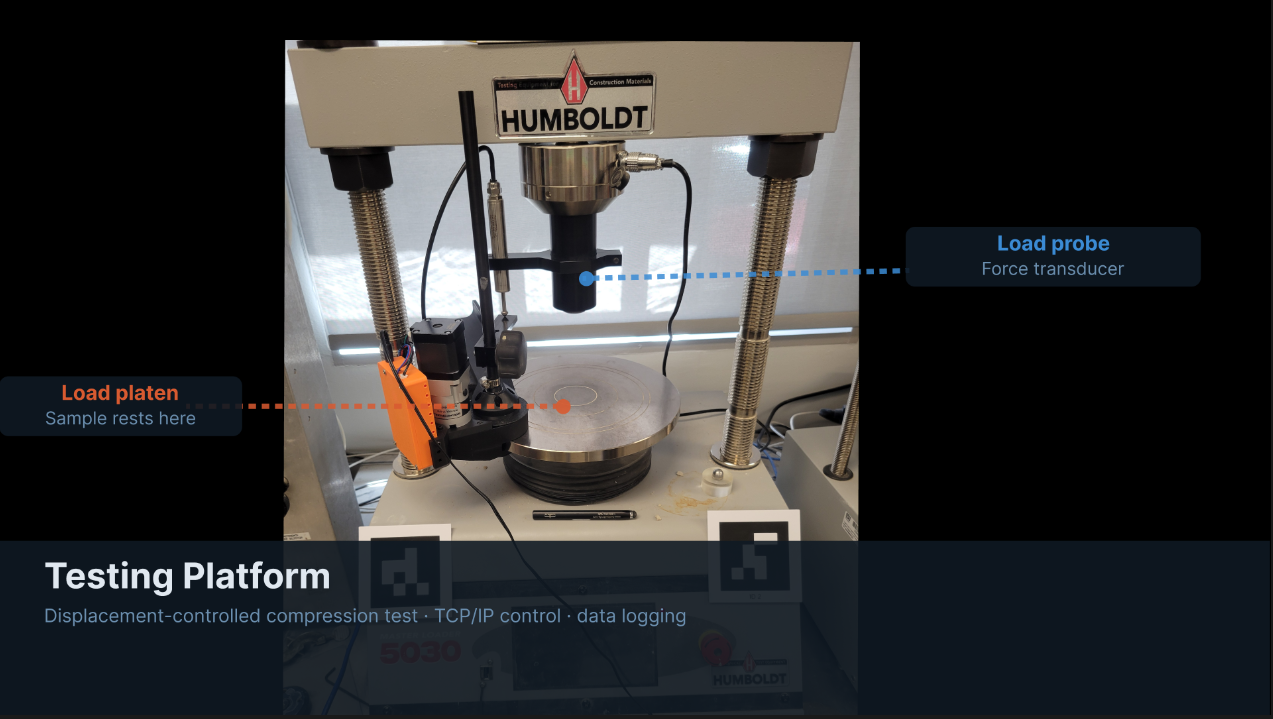
Use visual reference markers instead of fixed positions
Hard-coding coordinates breaks any time a table gets nudged. Instead, I placed ArUco markers — small printed reference patterns, similar to QR codes — on each testing machine. The robot reads these with a camera before every run and computes exactly where the machine is. This made the system robust to the real-world variability of a shared lab space.
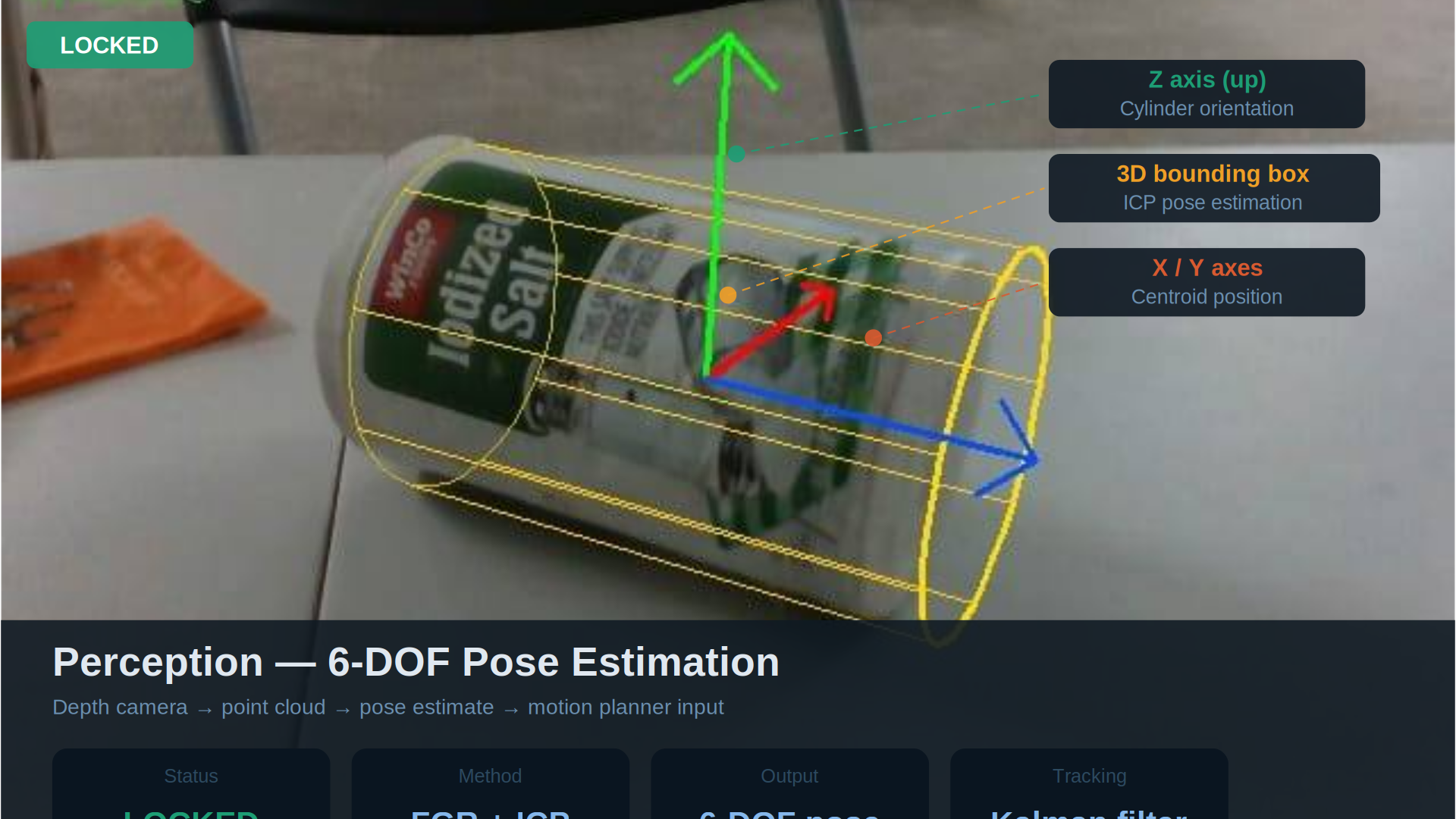
Build a vision pipeline to detect samples by shape
Rather than manually placing each sample in a fixed spot, I built a computer vision pipeline that locates soil sample cylinders on the workspace table by their shape and size. The robot uses this to plan its pick — removing a manual step and bringing the system closer to fully autonomous operation.
Keep the system self-contained and portable
The robot, camera, and control laptop all run on a dedicated mini router that travels with the setup. No dependency on lab infrastructure means the system can be repositioned anywhere in the building, and adding new sensors is as simple as joining the network.
The Prototype
Impact
- Frees technician time — compression tests that required constant manual attention can now run with the robot handling the physical steps
- More consistent results — the robot places samples the same way every time, removing a source of human variability from the testing process
- Built to expand — the modular architecture makes it straightforward to add new machines, sensors, or test types as the lab’s needs evolve
Status: Active — full pick-and-place pipeline working on hardware. Next: multi-sample autonomous test runs.