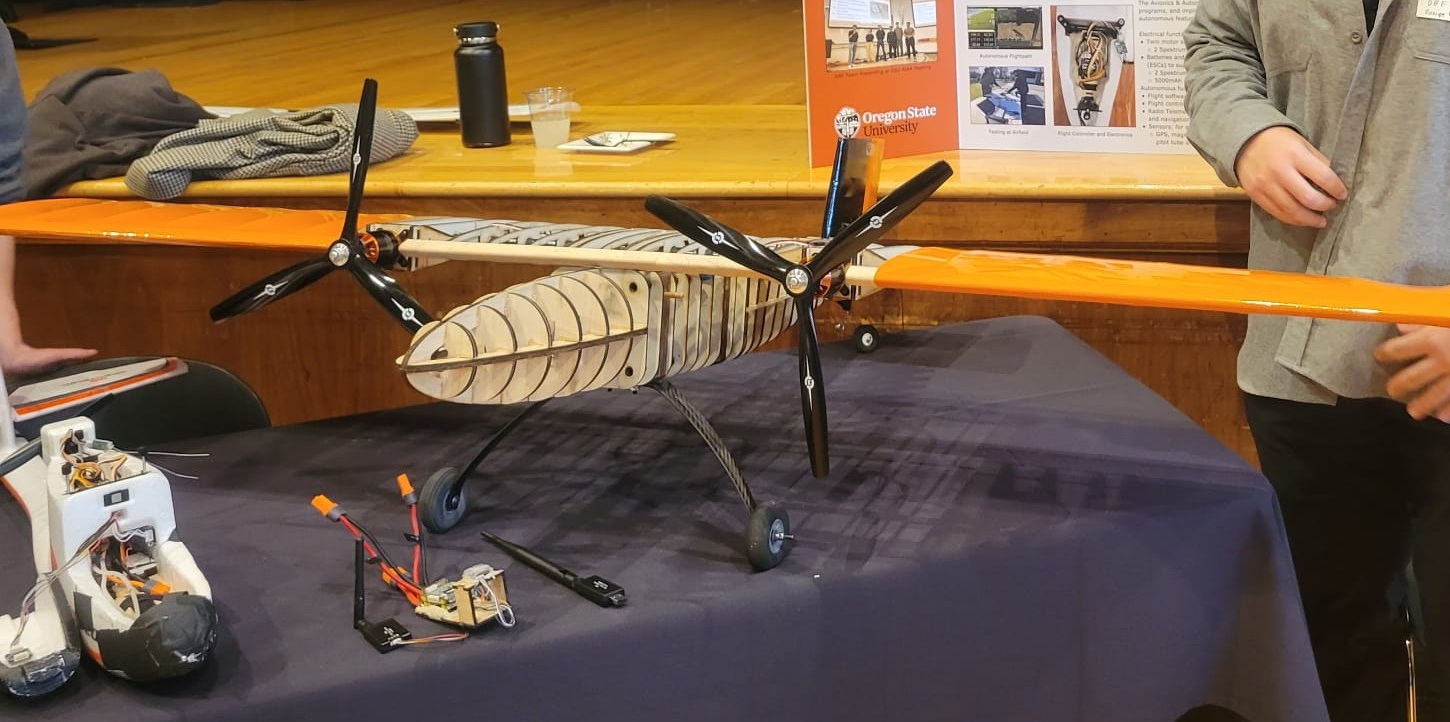
Autonomous RC Aircraft – Design Build Fly Capstone
Competition: AIAA Design, Build, Fly (DBF) 2024/25
Sponsor: OSGC, AIAA
Report: DBF Final Report
Problem
The AIAA DBF competition challenged our team to design and build a custom RC aircraft capable of captive-carry and autonomous flight — modeling the real-world X-1 supersonic aircraft experiments. Midway through the project, the team narrowly missed the competition cutoff. Rather than stopping, the scope was redefined: remove the glider, and make the mothership fully autonomous.
The core challenge became: validate a complete ArduPilot-based autopilot stack on a custom-built aircraft and achieve autonomous flight — a first for the OSU DBF team.
What I Did
Autonomous Systems Lead
Led the autonomous sub-team responsible for selecting, configuring, and validating the entire autopilot stack:
- Configured ArduPilot firmware for the aircraft’s flight dynamics and mission profiles
- Used Mission Planner for avionics setup, pre-flight checks, and live telemetry monitoring
- Defined and tested autonomous waypoint missions and failsafes (low battery, lost telemetry, recovery modes)
De-risking with a Test Bed
Before integrating into the custom airframe, I validated the full autopilot configuration on a retrofitted off-the-shelf aircraft. This meant any issues with ArduPilot tuning or Mission Planner configuration were caught on a sacrificial platform — not the hand-built competition plane.
Solving a Manufacturing Problem
During wing assembly, the team discovered an unintended geometric twist at the wingtips causing a negative angle of attack — a condition that would prevent the aircraft from generating lift at takeoff. The fix: switch the landing gear configuration from tricycle to taildragger, lowering the tail to restore a positive AoA on the ground without touching the wing structure.
Hardware Fabrication
Hands-on build throughout:
- Wing frame fabrication (balsa and basswood ribs, carbon fiber spar)
- Full avionics wiring and soldering — flight controller, ESCs, receivers, power distribution
- Airframe assembly and systems integration
Results
Achieved the team’s first successful autonomous test flight, validating the ArduPilot integration, waypoint navigation, and autonomous landing capability on the custom-built aircraft.
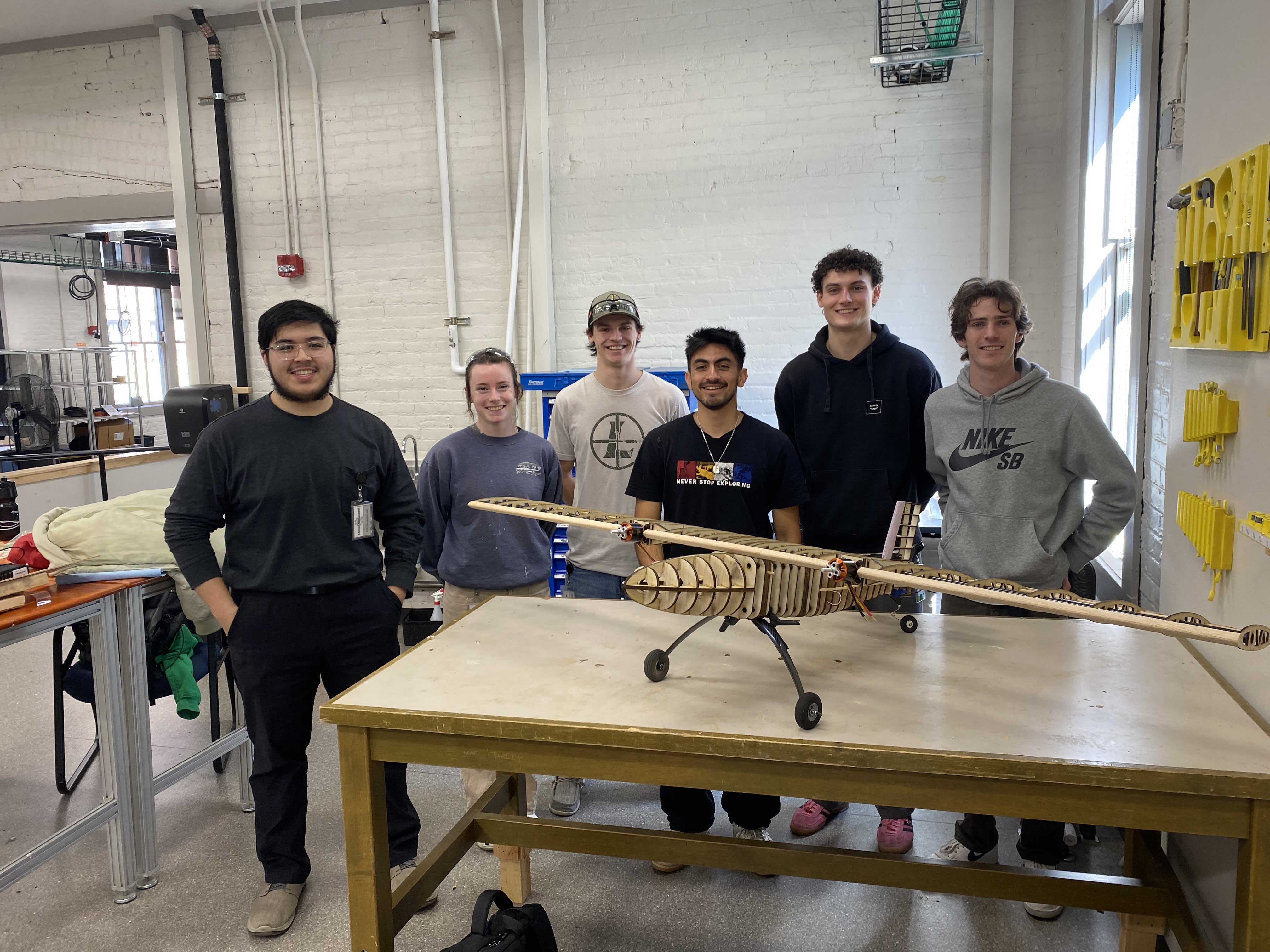
The Team
Build Process
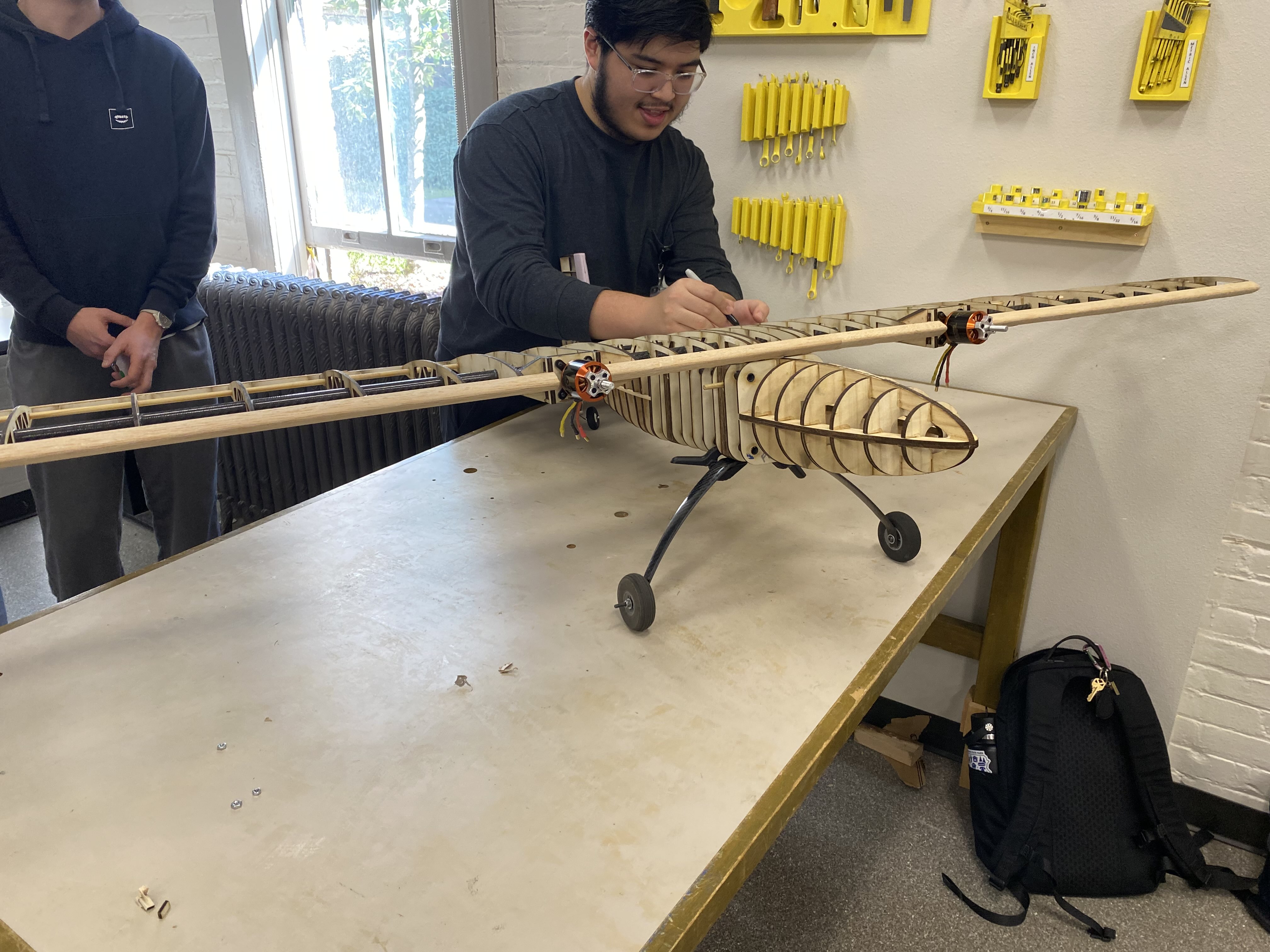
Marking the wing spar position during final assembly:
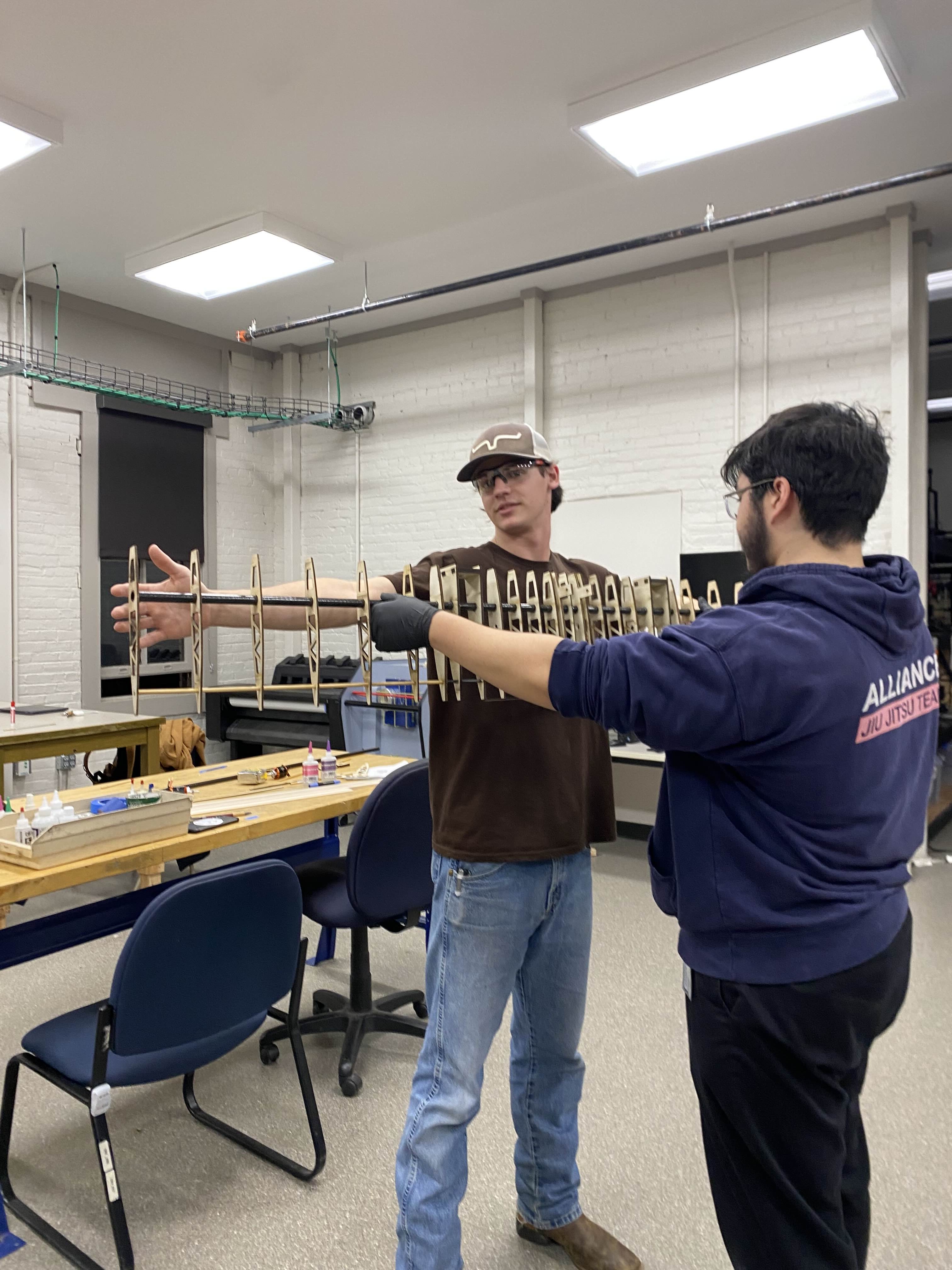
Wing frame fabrication:
Props mounted Test:
Control surfaces bench test: